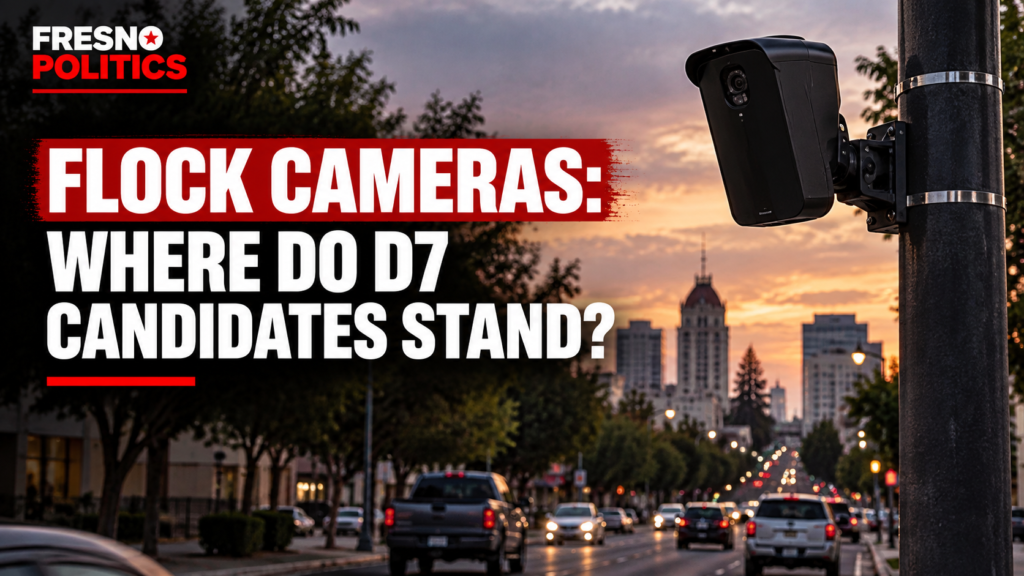
Where Fresno District 7 Candidates Stand on Flock Cameras ?
Flock cameras have become a growing point of debate in Fresno as city officials approach the future of the city’s automated license plate reader network.
The technology can capture license plate information and assist law enforcement investigations. Fresno’s existing agreement with Flock Safety was approved for a three-year term, with the original contract authorized at up to $1.498 million. A later amendment increased the overall agreement to approximately $1.668 million and added cameras and software for the city’s Department of Public Utilities.
Now, candidates in Fresno City Council District 7 are weighing in on whether the city should continue using the technology.
Nav Gurm: Do Not Renew the Contract
District 7 candidate Nav Gurm told The Fresno Bee that Fresno should not renew its Flock camera contract.
Gurm cited concerns involving the Fourth Amendment, government surveillance and the operation of a citywide license-plate network. He said any public-safety technology should include safeguards such as warrants, independent audits, limited data retention and restrictions against expanding the technology beyond its original purpose.
Gurm’s position is consistent with comments he made at a May 2026 candidate forum, where he said that if Flock were cooperating with federal immigration enforcement operations, he would oppose the technology.
Ariana Martinez-Lott: Renewal Depends on Safeguards
Ariana Martinez-Lott also opposes renewing the Flock contract without additional safeguards and public transparency.
Martinez-Lott has argued that residents should receive more information about how surveillance technology is used, what information is collected, who can access it and what accountability exists when the technology is misused.
She has also questioned whether the city adequately engaged residents before adopting the current system.
At a May candidate forum, Martinez-Lott said she was strongly opposed to Flock cameras and wanted the next District 7 councilmember to have a role when the city’s contract comes up for renewal.
The Issue Is Bigger Than the Cameras
The debate over Flock is ultimately about more than license plate readers.
Supporters of the technology have pointed to its use as an investigative tool, while opponents and civil-liberties advocates have raised questions about privacy, data retention, access and oversight.
For District 7 voters, the candidates’ statements raise several questions:
- Should Fresno renew its Flock contract?
- What limits should apply to license-plate data?
- How long should information be retained?
- Who should be allowed to access the data?
- Should independent audits be required?
- What level of public oversight should exist?
The City of Fresno’s existing contract and amendments show that Flock is already part of the city’s surveillance infrastructure. The next phase will involve deciding what safeguards, limitations or changes should apply going forward.
Both District 7 candidates currently oppose simply continuing Fresno’s Flock camera arrangement without additional conditions.
Gurm is calling for the contract not to be renewed and emphasizing constitutional safeguards, audits, warrants and limits on data use.
Martinez-Lott says renewal should depend on greater transparency, public trust and protections for constitutional rights.
The question for Fresno voters is not only whether the city should use Flock cameras, but also what rules should govern surveillance technology if the city continues using it.